Album 5 (HU 3909)
|

|
|
|


Jumping flea
Lady bee sings the blues
Bumble-bee's lullaby
Caterpillars
The spider and the little night-moth
Bumping beetles
Waltzing mosquitoes
Marching ants
A dragon-fly in Paris
Lady-bird in distress
Cricket's theme
|
This album is a follow-up of the more easy concept started in album 4, for pupils who take lessons for about two years. |


|
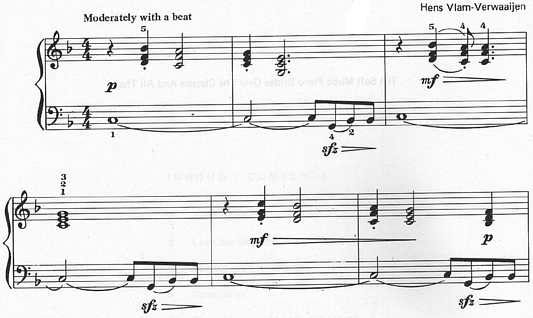
Jumping flea |
|
Let the pupil catch the rhythm by beating the time on the closed piano-lid. By doing so he doesn't have to think about notes and fingering etc. and the rhythm is, so to speak, more or less printed in both hands. |
|
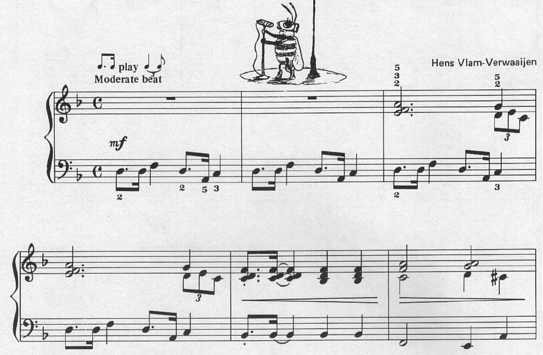
Lady bee sings the blues |
 610 Kb complete 610 Kb complete |
|
Same story about "beat" etc. in this piece as well. |
|
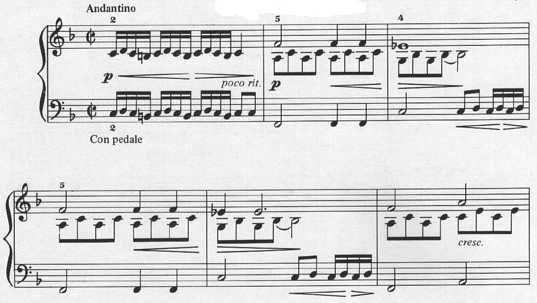
Bumble-bee's lullaby |
|
It is not an easy task for a less experienced player to achieve uniformity in both hands. For practice it helps when you play the left-hand f and the right-hand pp, while trying to listen to the left-hand. |
|
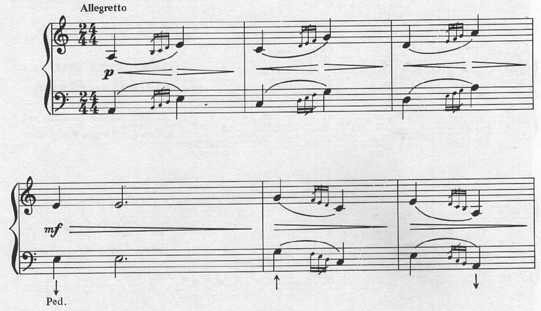
Caterpillars |
|
When you imagine how that little creature moves on you'll be able to play it just right. |
|
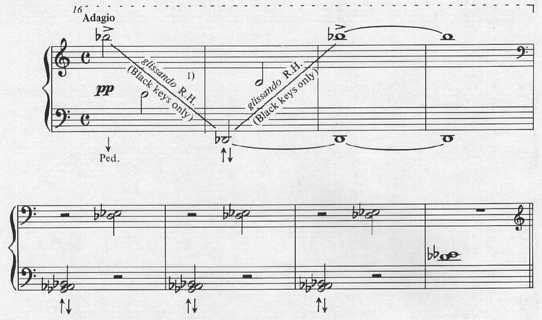
The spider and the little night-moth |
656 Kb |
|
And it doesn't turn out to well for the little night-moth.. |
|
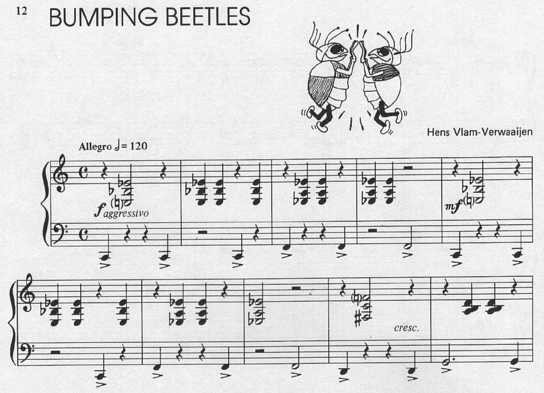
Bumping beetles |
702 Kb complete |
|
They clash as hard as a stone, but in the middle-section they seem to make piece. |
|
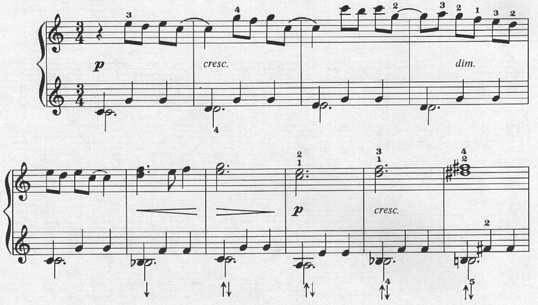
Waltzing mosquitoes |
|
If one could only keep down those insects by playing this waltz. There is a priggish one in the left-hand in the third line. |
|
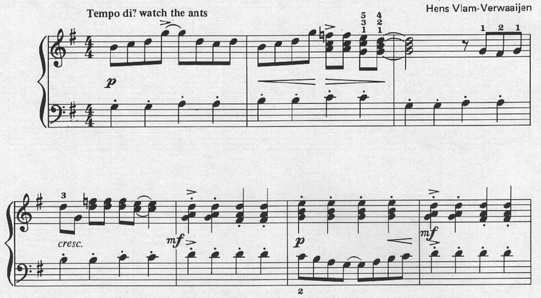
Marching ants |
713 Kb complete |
|
A jolly march with pop-elements and an ordinary scale in G major and at the end two little ants left behind. |
|
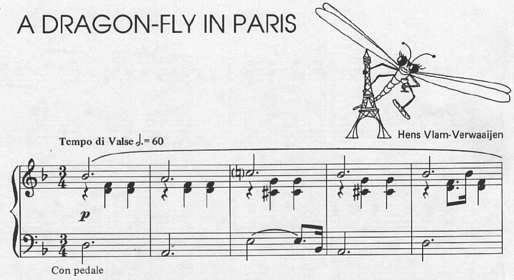
A dragon-fly in Paris |
736 Kb complete |
|
Flying along the Eiffel-tower, spotting terraces with people drinking a glass of wine and the sound of a far-away accordion. |
|
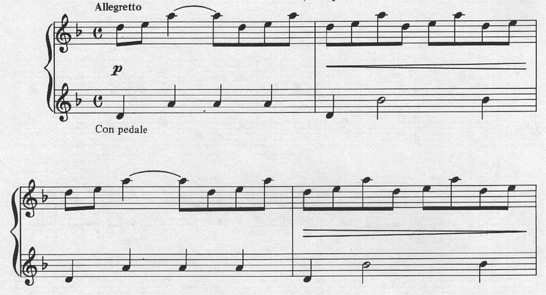
Lady-bird in distress |
840 Kb complete |
|
A sad and tender little story. |
|
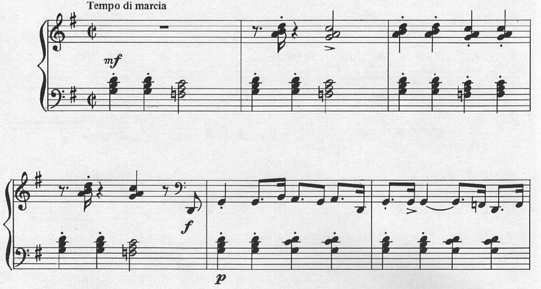
Cricket's theme |
|
This cricket plays with its little right-paw across its left-one while hopping around. |

No menu? Please click here